ServicesWell Water Treatment
Well Water Treatment in Temple Terrace
If your well water smells of sulfur, leaves orange stains or scales your fixtures, we fit treatment equipment matched to what your well actually produces. Where you already have a system, we look at repairing it before we suggest anything new.
Treatment built around your well, not a catalog
A private well sends water straight from the ground into your home, with no utility treatment along the way. What comes up depends on the aquifer and the well itself. Around the Tampa Bay area, the usual complaints are hydrogen sulfide, which causes the rotten-egg smell, along with iron, manganese and hardness picked up from limestone.
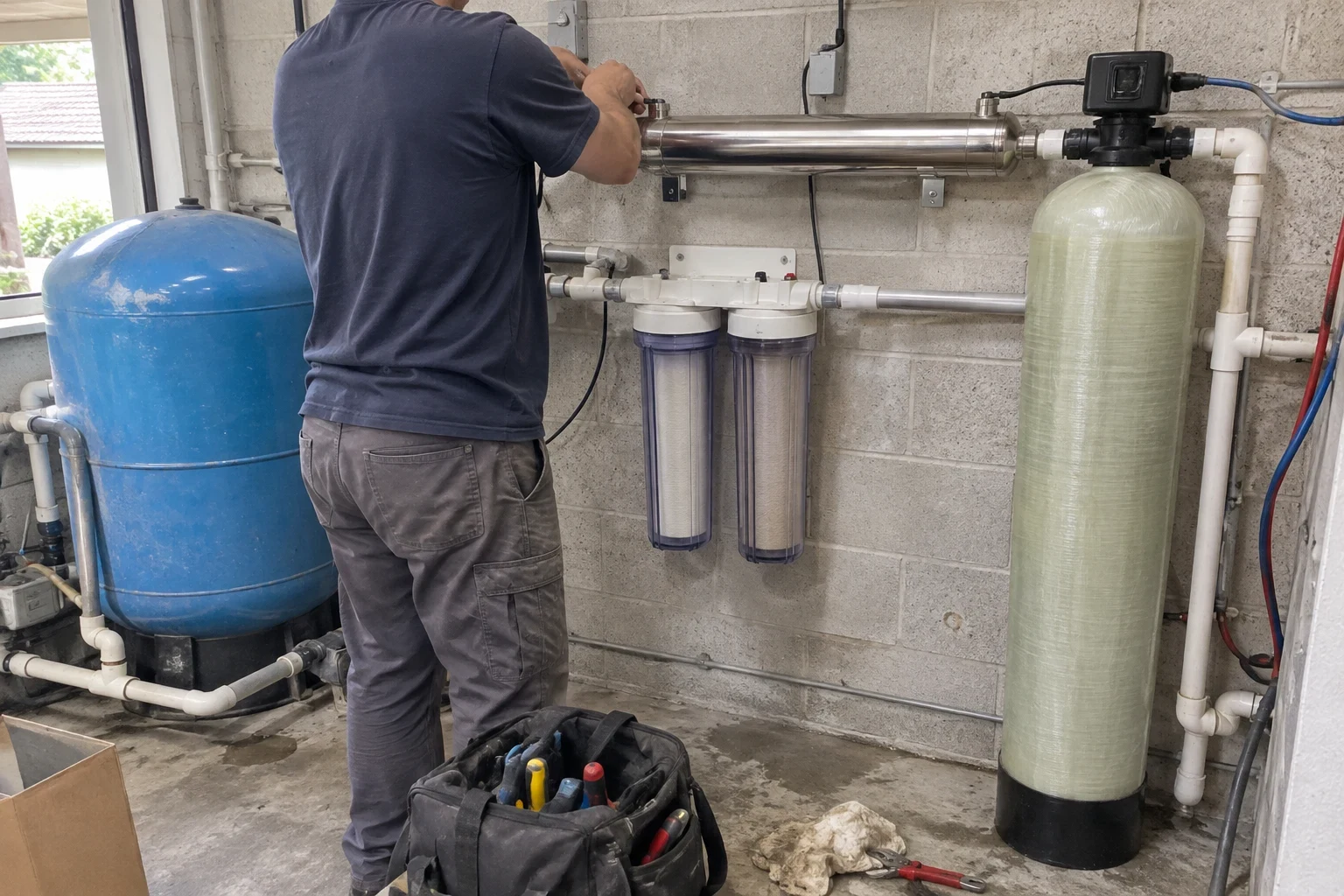
Well water treatment is usually a short sequence of equipment rather than one box: a stage for gas and iron, a softener if hardness is genuinely high, and sometimes a sediment filter or a drinking-water stage. We size each piece to your flow rate and the problem in front of us, and we keep the layout open so media and filters can be reached later.
Many homes we visit already have a system that has stopped doing its job. A failed control valve, fouled media or a worn injector can often be repaired for far less than a new setup. When equipment is undersized for the water or past sensible repair, we explain why and show you what we found.
What the work includes
- Sulfur and odor control
- Hydrogen sulfide is a gas, so an ordinary cartridge will not hold it for long. We use oxidation, air injection or a catalytic media bed, chosen by how strong the odor is and whether it comes from the well or the water heater.
- Iron and manganese removal
- Dissolved iron runs clear from the tap and turns orange once it meets air. Oxidizing filters convert it to particles the media can catch and backwash away, keeping it off your laundry, tubs and fixtures.
- Sediment protection
- A sediment stage ahead of the main equipment catches sand and grit from the well. It protects valves and media from early wear.
- Hardness and drinking water stages
- If hardness is high enough to justify it, a softener goes after the iron stage. For cooking and drinking, an under-sink unit can follow; our Water Softeners and Reverse Osmosis pages cover each in detail.
- A careful, serviceable installation
- We run plumbing square and supported, add bypass valves so the house keeps water during service, and route the drain line properly. The finish matters because this equipment will be opened for maintenance for years.
Signs your well water needs treatment
A rotten-egg smell
Often strongest on the hot side or first thing in the morning. If only hot water smells, the water heater anode may be part of the story, and we will tell you so.
Orange, brown or black stains
Rust rings in toilets, streaks in the shower and tinted laundry point to iron. Black specks or dark stains often mean manganese.
An older system that stopped keeping up
Odor or staining that returns after years of good water usually means exhausted media, a misprogrammed valve or a failing air charge. These are often repairable.
Scale and spotted glassware
White crust on faucets and cloudy spots on dishes suggest hardness. It is worth treating only when the level warrants it.
Pressure that drops through the equipment
A clogged sediment filter or a bed that no longer backwashes can choke flow. Good pressure at the tank and weak pressure at the faucets is a strong clue.
How a well treatment visit runs
- 1
A conversation by phone
Tell us what you notice at the tap, how old the well and any existing equipment are, and whether you have a recent water report. That shapes what we look at and what we bring.
- 2
A look at your well equipment
At your home we check the pressure tank, existing filters, drain access and plumbing, and confirm flow so new equipment is sized correctly. If you already have a system, we inspect it first.
- 3
An honest recommendation
You get a plain explanation and a written, line-item estimate. If a repair will bring back good water, that is what we recommend.
- 4
Installation day
We protect floors, keep the water off only while we tie into the plumbing, then install and program the equipment and run backwash cycles before we leave. We clean up and show you the settings and bypass valves.
- 5
Staying with you afterward
Once the equipment is running, we remain your contact for routine upkeep, replacement filters and any service it needs as the years go on.
What moves the price of well water treatment
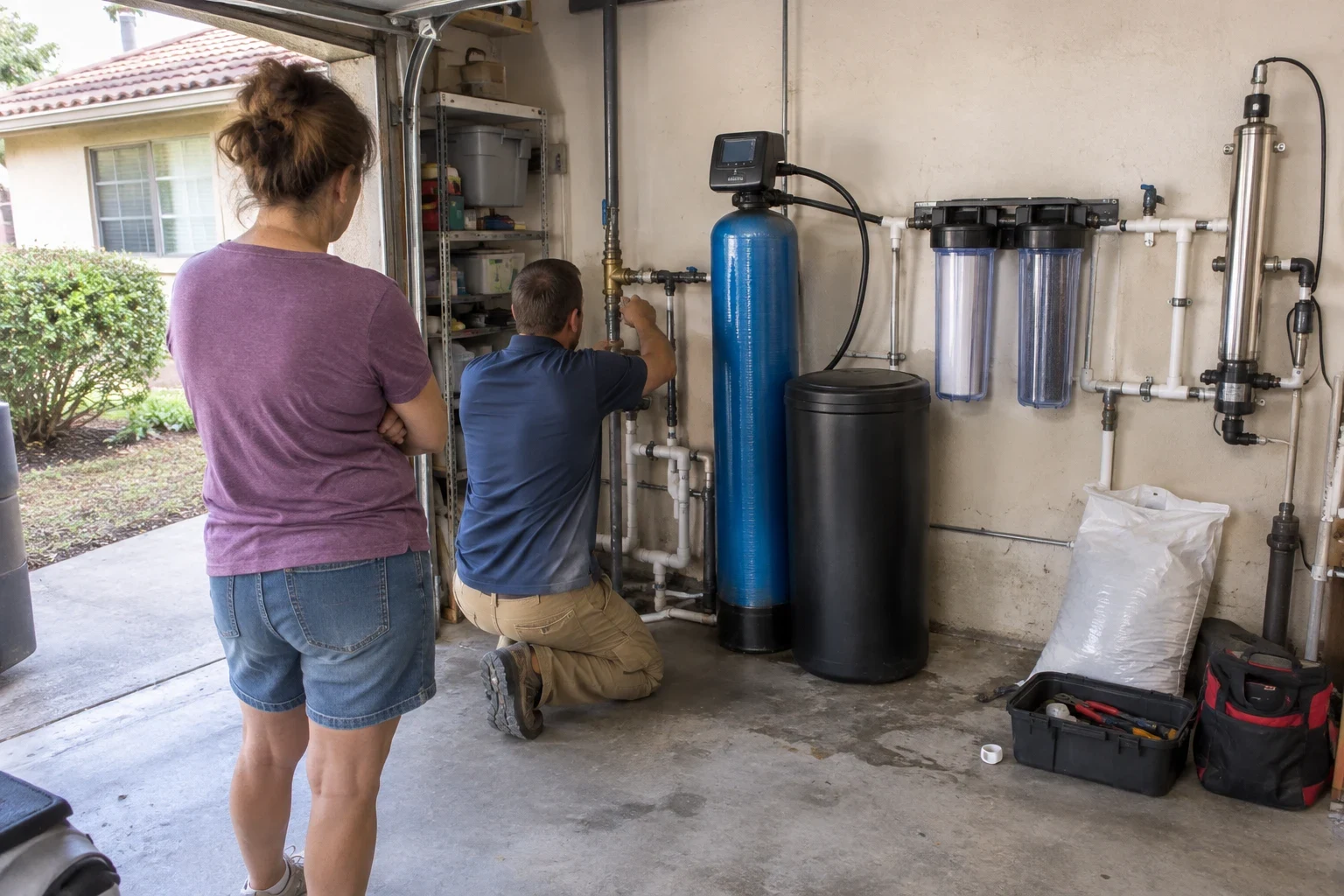
No two wells deliver quite the same water, and the space the equipment sits in varies just as much, so a figure only means something after we have seen both. Your written estimate lists every part and the labor separately, so nothing is folded into one lump sum. If sound equipment can be put right with a repair, that tends to be the lower-cost route, and we say so plainly.
- How many problems the water has
- Sulfur on its own may need only one stage. When sulfur, iron and hardness show up together, each needs its own tank and control valve.
- Strength of the sulfur or iron
- Heavier levels call for a larger media bed or an oxidizer such as air injection or a chemical feed, and that means more equipment.
- Flow rate and household use
- Tanks have to match the gallons per minute your pump delivers and how many bathrooms run at the same time. Equipment that is too small wears out early.
- Space, drain and power
- A garage with a drain and an outlet close by keeps the install simple. Running a drain line or power out to a well house takes more time.
- Condition of existing equipment
- If the tank is sound, a new valve or fresh media may be all it needs. A cracked tank or a control head with no parts available makes replacement the better value.
Well water treatment questions
Something not covered here? (813) 859-5527
Is my existing well system worth repairing?
In many cases it is. Control valves, injectors, seals and media can usually be swapped out on their own while the tanks stay in place. We suggest a complete new system only when a tank is failing, parts are no longer made, or the equipment was never sized for your water. Our Water Softener & Filtration System Replacement page walks through how we weigh that decision.
Do I need a softener with my well?
Not always. Some wells around here run moderately hard and others do not. We look at your fixtures and any water report you already have before suggesting one, and we will not add a softener your water does not need.
Will the treated water taste of chlorine?
Some systems use chlorine to oxidize sulfur and iron. A carbon stage afterward removes the leftover chlorine before it reaches your taps. If you would rather avoid a chemical feed, air injection is often a workable alternative.
How long will we be without water during installation?
Usually only while we cut into the plumbing and connect the new equipment, not the whole visit. We tell you before we shut the main off. Bypass valves mean later service rarely interrupts your water at all.
What upkeep does a well treatment system need?
Backwashing filters handle most cleaning on their own schedule. Sediment cartridges need periodic changes, chemical feeds need refilling, and media wears out over a span of years. We stay available for that maintenance, so you have one number to call.
Talk through your well water with us
Tell us what you are seeing and smelling at the tap and what equipment is already in place. We will explain whether a repair, an added stage or a new system makes sense for your home in Temple Terrace or nearby Thonotosassa.