ServicesChlorine & Chloramine Removal
Chlorine & Chloramine Removal in Temple Terrace
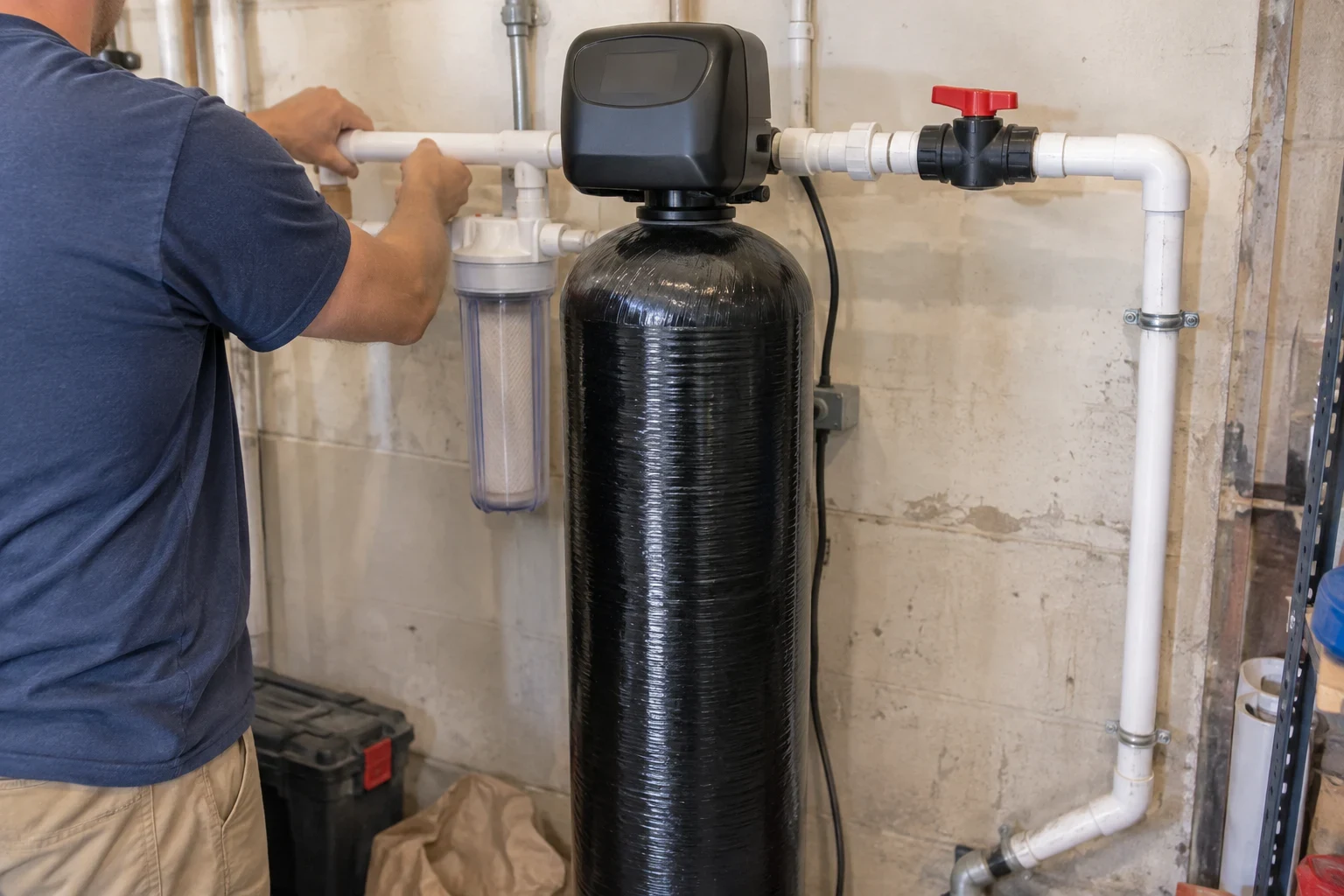
We fit carbon filtration that takes the treatment-plant taste and smell out of the water throughout your home. If you already own a carbon system, we first check whether fresh media will bring it back, so you only pay for new equipment when it is truly needed.
Removing the disinfectant once its job is done
City water is disinfected so it arrives safe. That is a good thing, but the chlorine or chloramine is still there when you fill a glass or step into the shower. Many people notice it as a pool-like smell, a flat taste in coffee, or skin and hair that feel dry after bathing.
Chlorine and chloramine behave differently, and that matters for the equipment. Free chlorine is pulled out readily by standard activated carbon. Chloramine, a blend of chlorine and ammonia that many utilities now use, is more stable and needs catalytic carbon with more contact time. A filter sized for one can fall short on the other, which is why we start by confirming what your utility uses from its published water quality report.
Our approach is repair before replace. A tank that has gone stale often needs new media and a serviced valve, not a whole new system, and we will tell you plainly which situation you are in.
What the work includes
- 01
Media matched to your water
We specify standard or catalytic carbon based on whether your supply carries chlorine or chloramine. Getting this right is the single biggest factor in how well the system performs.
- 02
A tank sized for contact time
Carbon only works while water is in contact with it. We size the tank to your household's peak flow so a running shower and a dishwasher at the same time still get properly filtered water.
- 03
Sediment pre-filtration
A cartridge ahead of the carbon catches grit from the main and keeps the bed from fouling early. Cartridges are inexpensive and easy to change, which protects the more costly media.
- 04
Careful point-of-entry installation
The system goes on the main line ahead of the water heater, so every tap and shower benefits. We also fit a bypass that keeps water flowing to the house while the tank is being serviced, and we tidy the work area when we finish.
- 05
Ongoing support
We provide ongoing customer support for maintenance, filter replacements and service needs. You will know when the pre-filter is due and roughly when the carbon will need attention.
Questions about Chlorine & Chloramine Removal?
Call(813) 859-5527Signs your water needs chlorine or chloramine removal
A pool smell at the shower
Heat drives chlorine out of the water as steam, so many people first smell it in a closed bathroom during a hot shower. If the odor is strongest with the hot tap on, disinfectant is the likely cause.
Coffee and tea taste off
Chlorine compounds flatten delicate flavors. A noticeable difference between tap water and bottled water in the same recipe is a common clue.
Your carbon filter has stopped working
If the smell has crept back after a few years with a carbon system, the media is usually spent. That typically calls for fresh carbon, not a new system.
Dry skin or brittle hair
Some people find chlorinated shower water harsh, especially through long, warm summers when showers run more often. Filtering at the main is the practical way to treat every shower in your home.
Rubber parts wearing early
Chloramine can be tough on some rubber seals, flappers and hoses over time. If you keep fitting new toilet flappers or washer hoses, mention it when you call.
How a chlorine removal job runs
- 1
A conversation by phone
We ask about your home's size, how many people live there, what you notice in the water and whether you already have equipment installed. We also confirm whether your utility treats with chlorine or chloramine.
- 2
A look at what you have
If there is an existing system, we inspect the valve, tank and media first. You get a clear answer on whether it can be restored or whether its age and condition make replacement the better choice.
- 3
Installation day
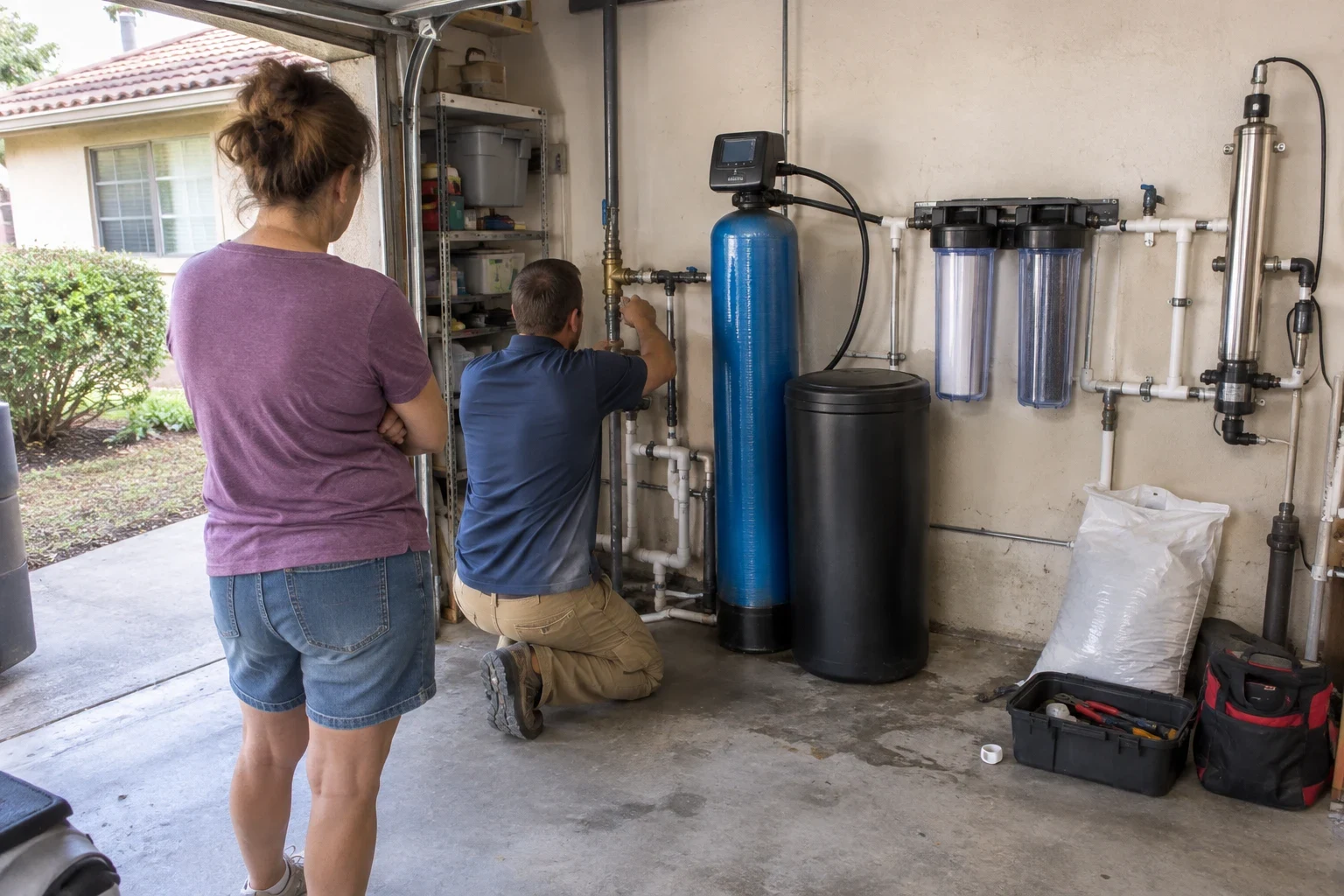
Most installs are completed in a single visit. We shut off the water briefly, plumb in the bypass, pre-filter and tank, then flush the new carbon until it runs clear. In many Florida homes the main enters near the garage, which usually keeps work out of living spaces.
- 4
Handover and ongoing care
On the way out, we point out the bypass handle, show you how the pre-filter cartridge changes and note when the next service is likely due. From then on, maintenance and fresh filters are a phone call away.
What affects the cost
Every home is priced on its own water and plumbing. These are the factors that move the number, and we walk through each one with you before any work begins so nothing changes later without a conversation.
- Which disinfectant you have
- Catalytic media costs more than standard activated carbon. Chloramine also tends to need a larger bed so the water spends enough time in contact with it.
- How much water you use at once
- A home where two showers, a washer and a dishwasher can all run together needs a tank with more carbon in it. Sizing for those busy moments keeps the water treated and the pressure steady, and a bigger tank adds to the cost.
- Restoring versus replacing
- Re-bedding a sound tank with fresh media is usually the lower-cost route. A cracked tank or a failing valve on an older unit can make a new system the better value.
- Plumbing location and access
- A main line that is easy to reach in a garage is straightforward. Tight spaces, an outdoor location that needs protection, or extra pipework add time and materials.
Chlorine and chloramine removal questions
Will a regular carbon filter remove chloramine?
Only partly, and not for long at normal household flow rates. Chloramine needs catalytic carbon and more contact time than free chlorine. If your utility uses chloramine and your filter was built for chlorine, that mismatch could explain why the smell persists.
Can you fix my existing carbon system instead of replacing it?
Often, yes. If the tank is sound and the valve works, fresh media and a serviced valve usually restore performance. If the unit is undersized for chloramine or the parts are worn out, we explain why a new system is the better buy.
How long does the carbon last?
It depends on your water use and the disinfectant level, but carbon beds generally last several years before the media is spent. The sediment pre-filter is changed far more often. We give you a realistic schedule for your household during the handover.
Will filtering the whole house reduce my water pressure?
A correctly sized system should leave your pressure feeling the same. When people do notice a drop, the cause is usually a tank too small for the home's busiest moments or a pre-filter cartridge that has clogged. We size the tank with your peak use in mind, and routine cartridge changes take care of the rest.
Do I also need reverse osmosis?
Not for chlorine or chloramine alone, since carbon handles those well at the main. Some families add reverse osmosis at the kitchen sink for drinking and cooking water. We can explain the difference so you only buy what you will use.
Find out whether your current system can be saved
Tell us what you notice in your water and what equipment you already have. We will explain whether fresh media, a new system or nothing at all is the sensible next step.