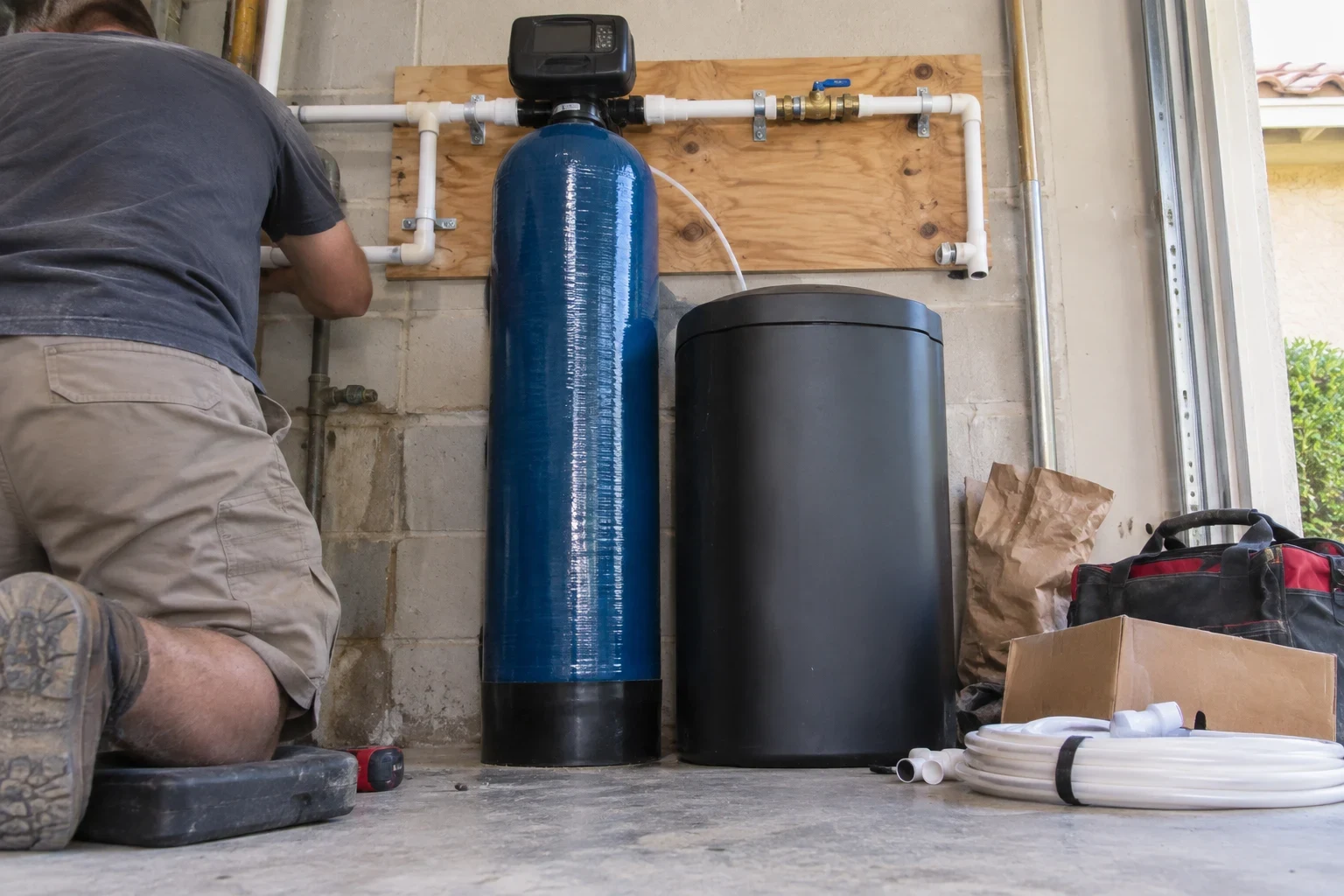
ServicesSystem Replacement
Water Softener & Filtration System Replacement in Temple Terrace
An older softener or filter system is not always finished. We look closely at the tank, valve and plumbing before recommending anything. When a new system really is the better choice, we explain why, size it for your home and install it with care.
A new system only when repair no longer makes sense
Many calls about a failing softener end with a new seal kit, a cleaned injector or a reset valve, not a new unit. We start there because a sound tank with a fixable valve still has years left, and retiring it early spends your money on equipment you did not need.
Some systems are past that point. Resin tanks crack, control valves go out of production and parts stop being made, and carbon tanks that have run for years can wear on the inside, not just the media. In those cases we tell you plainly, show you what we found and lay out what a new installation involves.
We take over softeners and whole-home filters put in by any company, and we can pair a new unit with reverse osmosis at the kitchen sink if drinking water is part of the conversation.
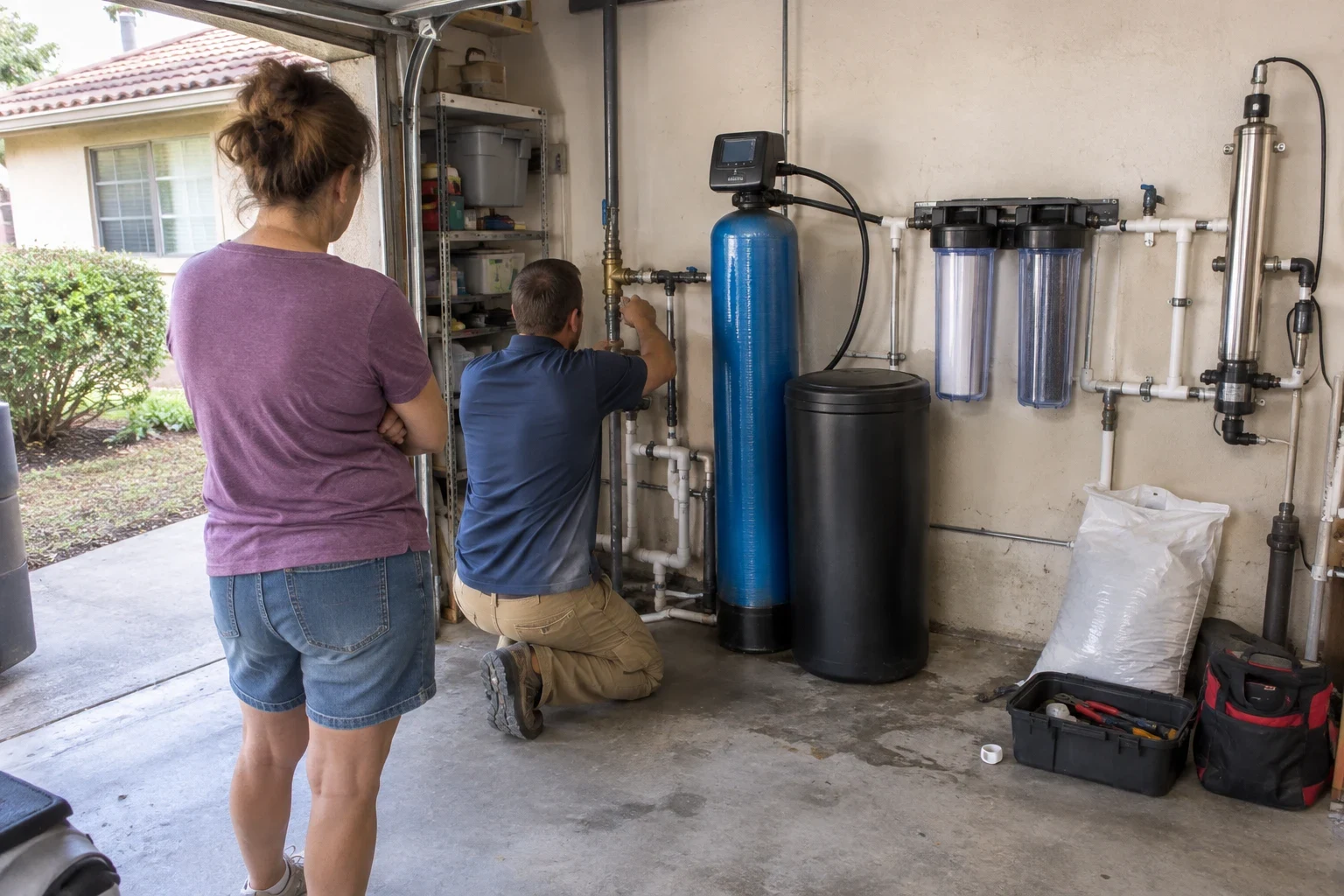
What the work includes
- 01
A close look at the old system
We check the tank, the control valve, the brine tank and the plumbing around it. You hear whether a repair is realistic before a new system is ever discussed.
- 02
Sizing for your household
A new softener or filter is matched to the number of people in your home, your bathrooms and your peak water use. An oversized tank wastes salt and water, while an undersized one runs out between regenerations.
- 03
Careful removal and haul-away
We drain and disconnect the old unit, protect floors along the path out and take the old tanks, media and salt with us.
- 04
Clean, correct plumbing
We fit a bypass valve so the system can be isolated later, set the drain line with a proper air gap and correct any leaking or mismatched fittings we find at the connection.
- 05
Programming and startup
The valve is set for your household, the system is flushed and run through a full cycle, and we confirm there are no leaks before we leave.
- 06
Someone to call afterward
Our support continues once the install is done. When the system needs routine upkeep, fresh filters or a service visit, you call us and we take care of it.
Questions about System Replacement?
Call(813) 859-5527Signs your system may be near the end
Resin beads at the faucets
Small amber beads in aerators or the toilet tank usually mean a cracked distributor tube or a failing tank. Sometimes the tube alone can be swapped; if the tank itself is damaged, it cannot.
No parts for the control valve
Older valves often go out of production. When the motor, circuit board or piston can no longer be sourced, a repair stops being an option.
A cracked or weeping tank
Moisture around the base of a mineral tank, or a bulge in its shell, points to a tank that should not stay in service.
Hard water returns despite repairs
Spotting on glass and scale on fixtures that keep coming back after cleaning and resets often mean resin worn out by years of treated city water.
Filtered water no longer tastes right
If a whole-home carbon system has started passing chlorine taste again and fresh media did not fix it, the tank or valve may be the problem.
How the job goes
- 1
A conversation by phone
You tell us the age of the system, what it is doing and where it sits in your home. Many questions get settled right there.
- 2
A visit and a straight answer
We inspect the system in person and explain whether repair or a new unit is the sensible call. If new equipment makes sense, you get a written estimate that lists the equipment and the plumbing work.
- 3
Installation day
We shut off the water, remove the old unit and install the new one, usually with your water back on the same day. Garage and closet installs are kept tidy, with floors protected and work areas covered.
- 4
Walkthrough and cleanup
We show you the bypass, the salt level and the settings, then clear away packaging and old equipment. You know what to watch and when to call us.
What shapes the cost of a new system
Two installs in similar homes can price quite differently. Most of the difference comes from the equipment chosen and the condition of the plumbing around it. We put each item on the written estimate so nothing appears later.
- System type and size
- A single-tank softener, a carbon filter paired with a softener and a dual-tank setup each carry different equipment costs. Tank size follows your household's water use.
- Reusing the existing connections
- If the loop, bypass and drain line are sound and in the right place, the job is simpler. Corroded fittings or a missing drain add work.
- Where the system sits
- A garage with clear floor space is straightforward. A tight utility closet or an outdoor pad with limited access takes more time.
- Valve and media choices
- Control valves vary in features and serviceability, and resin and carbon media come in different grades. We explain what each choice changes for your home.
Questions about a new softener or filter system
Can't you just repair my old softener?
Often we can, and we check that first. Seals, injectors, motors and distributor tubes can all be swapped on many units. We recommend a new system only when the tank is damaged, parts are unavailable or repairs would cost close to new equipment.
How long will my water be off?
Usually a few hours on installation day. We tell you when the shutoff will begin so you can plan showers and laundry around it.
What happens to the old equipment?
We take it with us. The old tanks, brine tank and leftover salt leave with our crew, so nothing is left sitting in the garage.
Will you take over a system another company installed?
Yes. We work on softeners and filters from many makers and installers. We look at what is there, reuse what is sound and change out what is not.
Should my new system be the same kind as the old one?
Not necessarily. If chlorine or chloramine taste is your main complaint, carbon filtration may matter more than softening. We talk through what your household wants from its water before suggesting equipment.
Who looks after the system once it is in?
We do. Call us when the media needs changing, a filter is due or a setting seems off, and we will handle the upkeep and any service the system needs.
Find out what your system really needs
Tell us what your softener or filter is doing and how old it is. We'll explain whether a repair will carry it further or a new system is the better use of your money, for homes in Temple Terrace and nearby towns such as Tampa and Brandon.