ServicesWater Softeners
Water Softeners in Temple Terrace
Hard water leaves a chalky film on glass shower doors, dulls fixtures and builds scale inside your water heater. We size and install softeners that match how your home actually uses water. If you already own one, we check whether a repair will do before suggesting anything new.
What a Softener Does, and When It Is Worth It
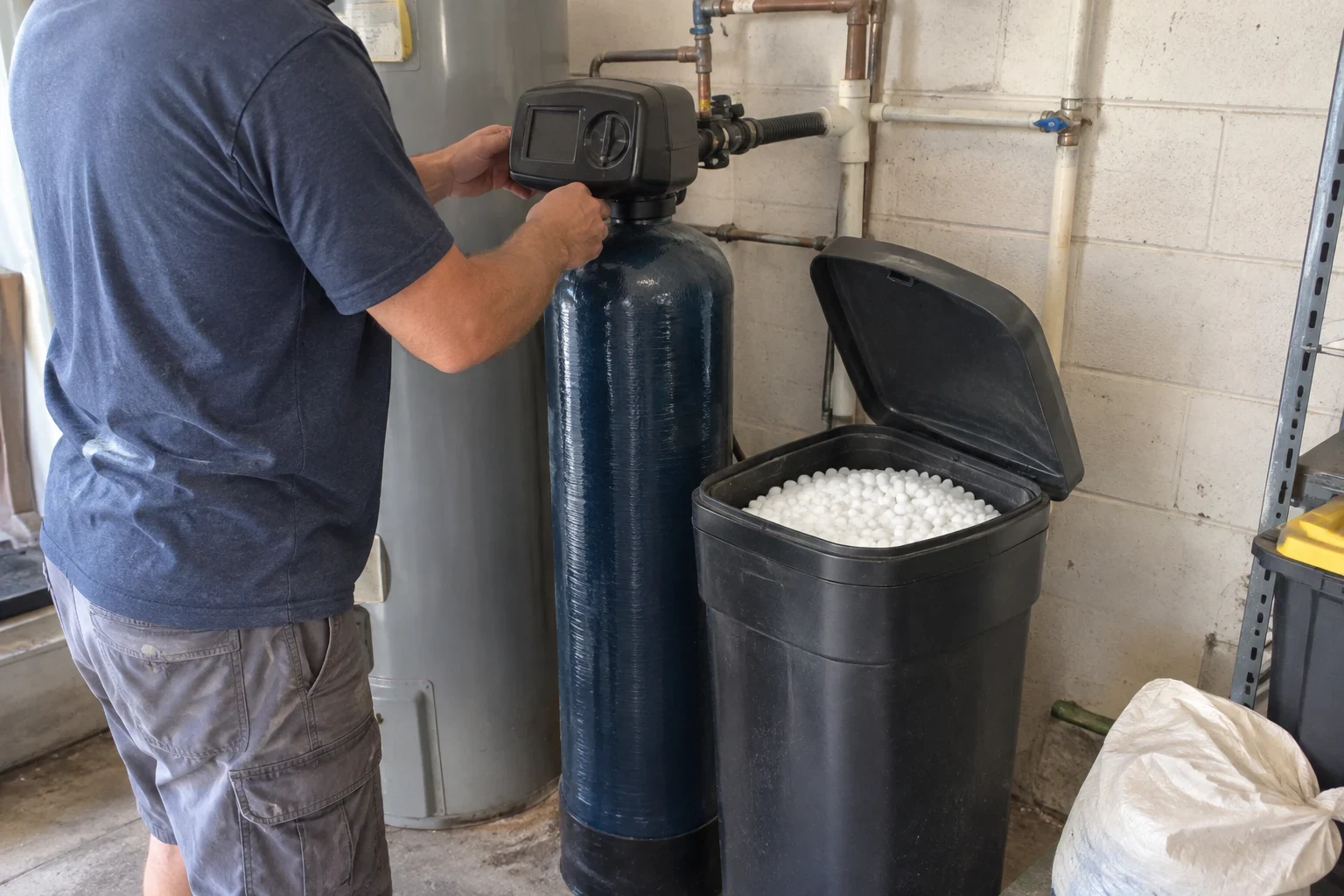
Inside a softener, a tank of resin holds onto calcium and magnesium as water flows past and releases sodium or potassium in their place. Calcium and magnesium are what form the scale on your faucets and, out of sight, inside water heaters, dishwashers and tankless units. When the resin beads can hold no more, the valve starts a regeneration cycle, rinsing them with salty water pulled from the brine tank, and the softener goes back to work.
A softener is the right call when hardness is causing real problems in your home, not as an automatic add-on. Groundwater drawn from limestone, common across the Tampa Bay area, tends to carry plenty of calcium, so many homes here do benefit. We base the recommendation on your supply's hardness and your household's daily use, and we tell you plainly if a softener would add little.
If you already have a softener that has stopped keeping up, start with a conversation about repair. A worn valve seal, a clogged injector or a salt bridge is often the whole problem. Our Water Softener Repair & Maintenance page covers that work in more detail.
What Your Softener Installation Includes
- 01
Sizing by grain capacity
We match the resin capacity to your hardness and household size so the unit regenerates about every few days, not every night. An undersized tank wastes salt and water; an oversized one lets the resin sit too long between cycles.
- 02
Metered control valve
We favor valves that regenerate based on the water you've actually used rather than on a fixed timer. Quiet weeks use less salt, and a full house of guests doesn't leave you with hard water by Sunday.
- 03
Clean plumbing tie-in
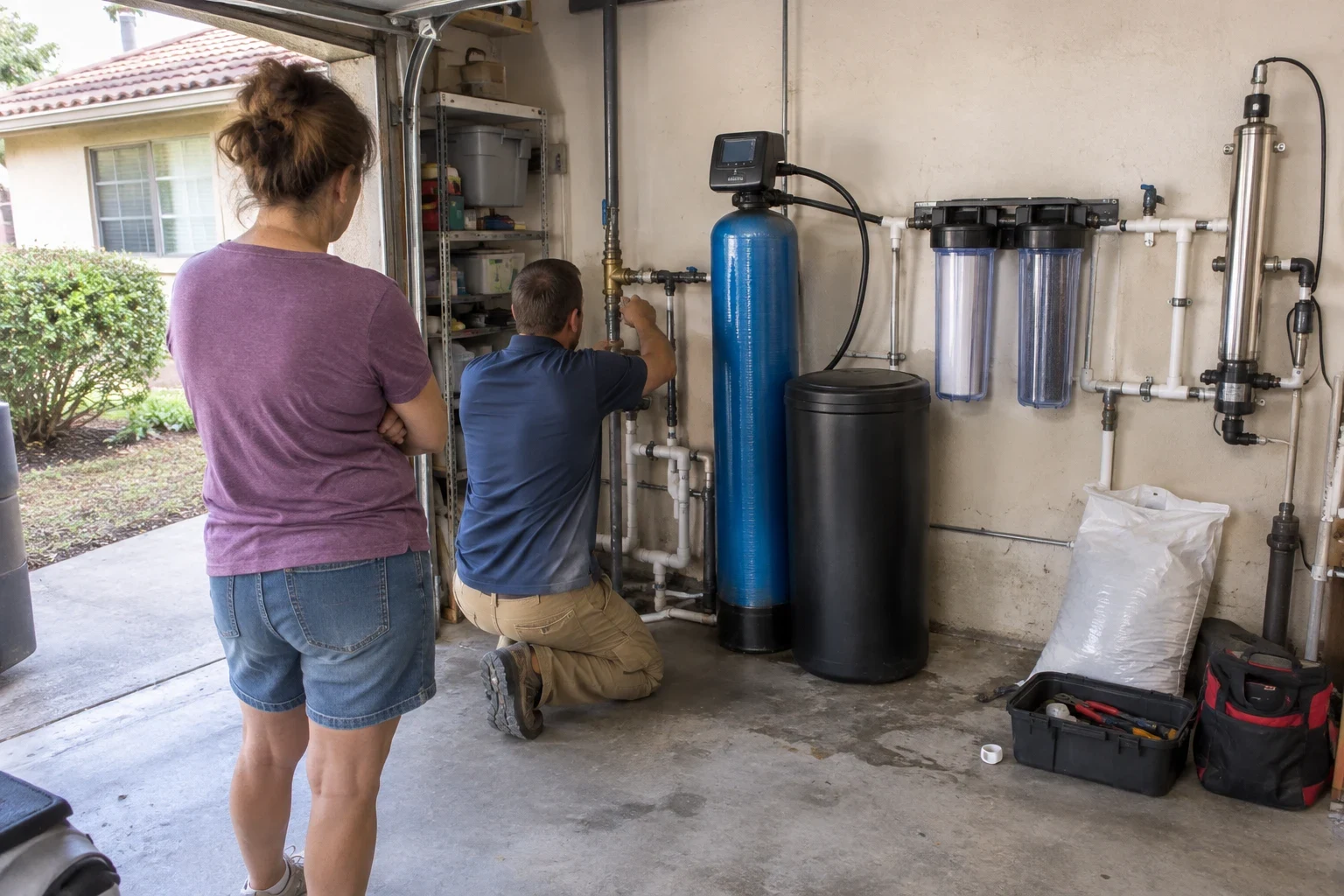
We connect the softener to your main line with a bypass, which lets you take the unit offline while the rest of the house keeps running water. If your home has a softener loop, we use it. If not, we show you the planned routing before any pipe is cut.
- 04
Proper drain and overflow
The regeneration drain gets an air gap so wastewater can never siphon back into your supply. The brine tank overflow is run to drain as well.
- 05
Programming and walkthrough
We set hardness, regeneration time and salt settings, then show you how to check the salt level and use the bypass. You'll know what normal looks and sounds like.
- 06
Support after the install
The relationship doesn't end when the truck leaves. We offer ongoing customer support for maintenance, filter replacements, and service needs, and a phone call is all it takes when the unit wants attention.
Questions about Water Softeners?
Call(813) 859-5527Signs Hard Water Is Affecting Your Home
White crust on fixtures
Chalky rings around faucet bases and showerheads that come back within days of cleaning point to high calcium.
Spotted glasses and shower doors
Water evaporates and leaves the minerals behind. If glassware comes out of the dishwasher cloudy, hardness is the usual cause.
Soap that won't lather
Hardness minerals react with soap, so shampoo and detergent run out faster and towels come out of the wash feeling stiff.
Noise from the water heater
When scale collects at the bottom of a tank heater, you hear crackling as it heats and wait longer for hot water. Tankless units may display scale-related error codes.
An existing softener that has quit
If you own a softener and the spots are back, check the brine tank first. In humid garages salt can fuse into a hard crust that bridges over the water, so the unit regenerates with no brine at all.
How a Softener Job Runs
- 1
A conversation by phone
We ask about your household, what you're seeing and any equipment already in place. If you have an older softener, we talk through whether repair makes sense before discussing a new one.
- 2
Checking the setup
On a visit we find the spot where your water supply comes into the house, look for an existing softener loop, and note the closest drain and outlet. You then get a written estimate with each line explained.
- 3
Installation day
We shut off the water, protect the floor and work area, then fit the bypass, the softener and its drain line. Your taps are dry for a portion of the visit rather than the whole of it.
- 4
Start-up and cleanup
We load salt, run a first regeneration, set the valve and check every joint for leaks. Packaging and old pipe leave with us.
What Moves the Price of a Softener
Softener pricing depends mostly on the equipment your home needs and how much plumbing it takes to connect it. We price each job after seeing the setup, and the estimate shows each part separately so nothing appears later.
- Capacity and valve
- Larger resin tanks and metered valves cost more up front than small timer units, though they usually use less salt over time.
- Install location
- A pre-plumbed loop in the garage is the simplest case. Routing a new loop through a wall or from an exterior main adds labor and materials.
- Existing equipment
- Removing an old unit adds some time. If your current softener is worth repairing, that is often the lower-cost path, and we'll say so.
- Pairing with filtration
- Many homes add whole-home filtration or reverse osmosis alongside a softener. Installing them together can share plumbing work.
Water Softener Questions
Will softened water taste salty?
For most households, no. The sodium added tracks the hardness removed, and the water is nothing like brine. If you want less sodium in what you drink, a reverse osmosis faucet at the kitchen sink handles it. You can also swap the bags in the brine tank for potassium chloride pellets, which do the same job without sodium.
Can you repair my old softener instead of replacing it?
Often, yes. Many failures come down to a seal, an injector, a motor or a salt bridge, and each of those is a sensible fix. When the resin is spent, the tank is cracked or parts for the valve are no longer made, we walk you through why a new unit makes more sense.
Does a softener remove chlorine?
No. A softener is built for hardness minerals and leaves disinfectants alone. For chlorine or chloramine taste and odor, see our Chlorine & Chloramine Removal service. A carbon system placed ahead of the softener also protects the resin from chlorine wear over the years.
How much upkeep does a softener need?
Mostly adding salt every month or two and checking the brine tank for a crust. With sensible settings the resin bed lasts many years. If you would rather hand that off, we can take care of periodic service.
Will a softener help with my well?
It deals with hardness, but well water often carries iron, a sulfur smell or sediment, and each of those needs its own treatment. Our Well Water Treatment page explains how we combine those systems.
Find Out What Your Home Needs
Tell us what you're seeing and whether you have a softener already. We'll give you a straight answer on repair, a new unit or no softener at all.