ServicesSoftener Repair & Maintenance
Water Softener Repair & Maintenance in Temple Terrace
Most softeners that stop working have one worn or clogged part, not a dead system. We find the actual fault, repair it when that is the sensible choice, and tell you plainly when the tank or valve has reached the end of its useful life.
A softener that stops softening usually needs a part, not a new system
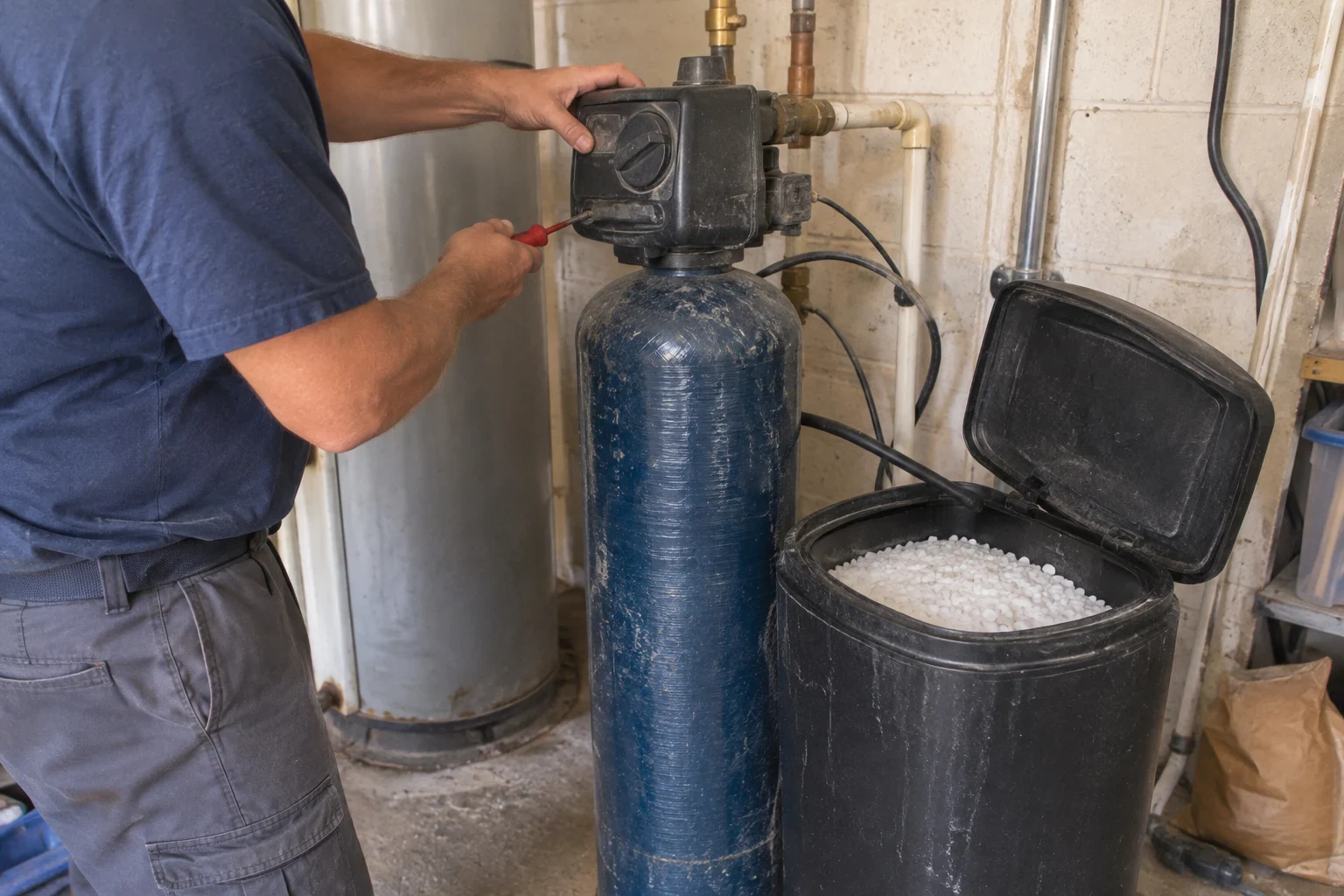
A water softener is a simple machine: a resin tank, a brine tank and a control valve that tells them when to regenerate. When spots return to your glassware or soap stops lathering, the cause is often small. A hardened salt bridge, a clogged injector screen or a worn valve seal can stop regeneration while the resin itself is still in good condition.
We start from the assumption that your system can be repaired, and we check it part by part before suggesting anything larger. If the resin is exhausted, the tank is cracked or parts for an older valve are no longer made, we explain why and walk you through what replacement would involve. That way the decision is yours, made with the facts in front of you.
Repair also serves well-kept systems. A maintenance visit once a year keeps the brine side clean and the valve moving freely, and it tends to catch small wear before it becomes a wet floor in the garage or utility room.
What we check and service
- Brine tank cleaning
- Salt bridges and mushy salt get broken up and lifted out, the sludge at the bottom is cleared, and the float and brine well are checked. Most softeners that appear to have quit start working again once this tank is clean.
- Injector and screen cleaning
- The injector draws brine into the resin tank during regeneration. Fine sediment collects in its small openings, and once it clogs, the resin never gets recharged. We take it apart, clean it and refit it with care.
- Control valve service
- We inspect the piston, seals and spacers, check the motor and drive gear, and confirm the valve moves cleanly through each cycle. Worn seals are changed one at a time rather than swapping the whole head.
- Settings and timer reset
- We confirm the clock, hardness setting and regeneration schedule match your household's water use, so the system is not wasting salt or running out between cycles.
- Resin and drain line check
- We look for resin beads at the faucets, signs of iron fouling and kinks or blockages in the drain line. If the resin is fouled but still sound, a resin cleaner can often restore it.
Signs your softener needs attention
Spots and scale are back
White film on shower glass or cloudy dishes after a wash usually means the resin is not being recharged. The cause is often on the brine side, not the resin.
Salt level never drops
If the salt in the brine tank looks the same week after week, a crust may have formed above the water line. Humid garages make this especially common, and the softener stops drawing brine even though it looks full.
Standing water in the brine tank
A few inches is normal for many systems. A tank half full of water points to a clogged injector, a blocked drain line or a float that has stuck.
Constant running or odd noises
A valve that cycles at the wrong time, hums without moving or keeps sending water to the drain usually has a worn seal, a failing motor or a clock that has lost its settings.
Small beads in faucets or toilets
Tan or amber beads mean resin is escaping the tank, often through a cracked distributor tube. That repair needs a careful look before anything else is decided.
What affects the cost of softener repair
The price depends mostly on which part has failed and how hard it is to source for your system. Many visits come down to cleaning and a set of seals, while a failed motor or worn-out resin costs more. You see the written estimate before any work begins.
The part that failed
Cleaning an injector or clearing a salt bridge is quick. A new valve motor, piston assembly or circuit board adds both parts and time.
Age and brand of the system
Common valves have parts that are easy to find. Older or proprietary units can take longer to source, and sometimes the parts simply no longer exist.
Resin condition
Resin that is fouled but intact may respond to cleaning. Resin that has broken down needs to be rebedded, which involves more labor and new media.
Location and access
A softener in an open garage is straightforward. One tucked into a tight closet or behind a water heater takes more time to service safely.
What to expect on the day
- 1
Start with a phone call
Let us know the brand, the approximate age of the unit and what has changed with your water. With that, we can carry the likely seals and parts on the first trip.
- 2
Diagnosis at your home
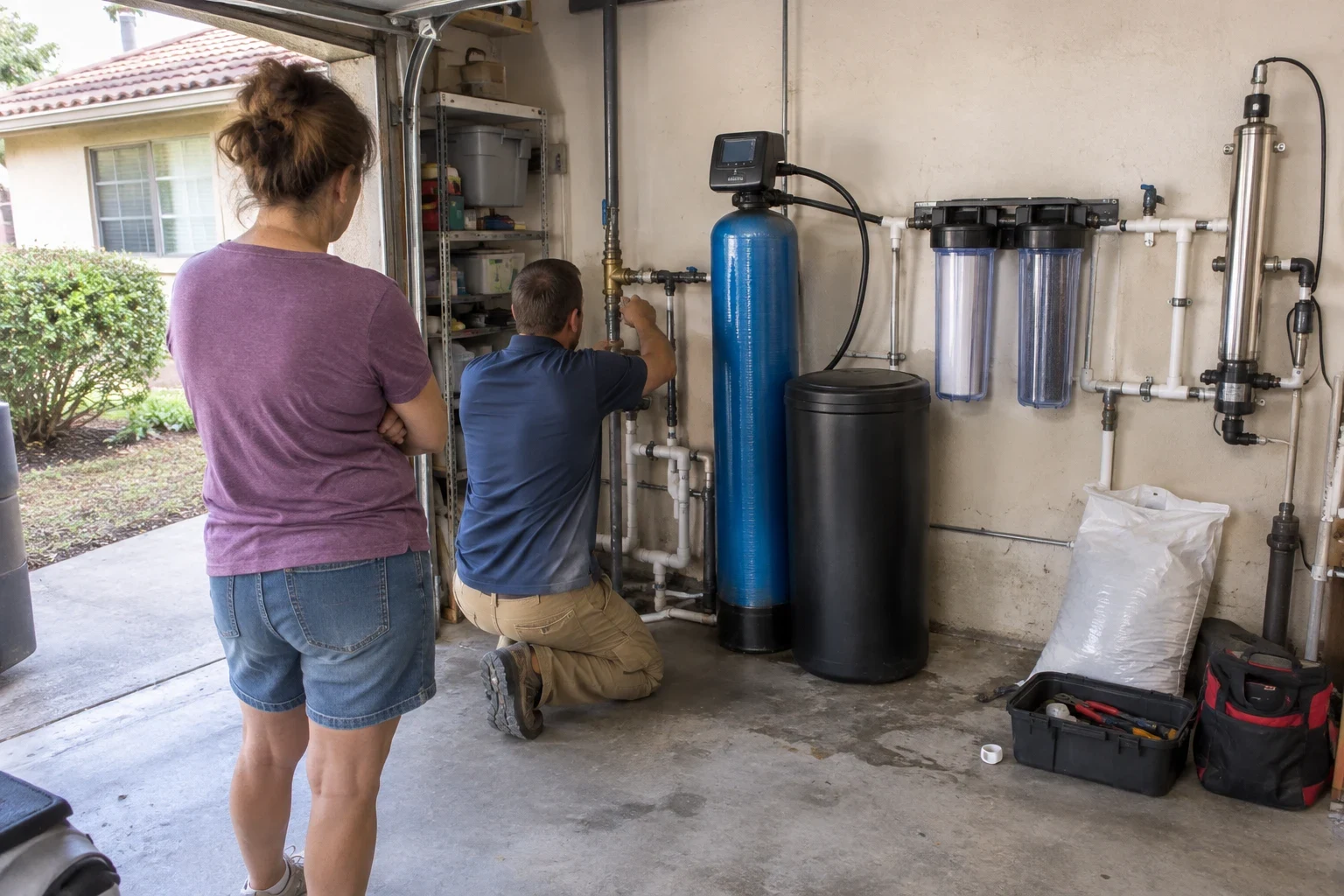
We place the system in bypass so your water stays on, then work through the brine tank, injector, valve and settings in order. We show you what we found and why it matters.
- 3
A clear answer before any work
You get a written estimate for the repair. If replacing the system makes more sense because of resin age, tank damage or unavailable parts, we say so and explain the reasoning without pressure.
- 4
Repair and a test regeneration
Once you approve the work, we make the repair, run a full regeneration cycle and watch each stage. We wipe down the unit, clear away old salt and leave the area as tidy as we found it.
Water softener repair questions
Is my older softener worth repairing?
Often it is. The tanks are durable, and most failures involve seals, injectors or a motor that can be swapped out on their own. When resin is near the end of its life and the valve is also failing, a new system is usually better value, and we will tell you that directly.
How often should a softener be serviced?
Once a year suits most homes. Check the salt monthly and break up any crust you see. A softener that also handles iron may benefit from more frequent resin cleaning.
Do you service softeners you did not install?
Yes. We work on systems put in by other companies or by previous owners. If parts for your model are hard to get, we will let you know before you commit to anything.
Can I still use water while my softener is broken?
Yes. Turn the bypass valve on the head of the unit and your home gets untreated water until the repair is done. We can show you where it is during the visit.
What happens if replacement is the better choice?
We explain why, then talk through the options on our Water Softener & Filtration System Replacement page. Nothing is removed until you have decided.
Will you stay involved once the softener is fixed?
We will. After the repair, our support continues for routine maintenance, filter changes and any service the system needs later. Keep our number near the unit and reach us whenever something seems off.
Get your softener working again
Tell us what the system is doing and how old it is. We will plan a visit, find the fault and give you an honest repair-or-replace answer.